







Mortgage rates climbed back to 7.03% the week of September 24, 2026, according to Freddie Mac's Primary Mortgage Market Survey, and days on market across Central Ohio have stretched out right alongside them. For investors, that combination changes the math on every deal in a specific way: it's not the rate itself that trips people up, it's underestimating how long a property actually takes to move through rehab, listing, and closing. The investors doing well right now aren't avoiding the market. They're building bigger cushions into their numbers and underwriting every deal for more than one outcome.
The Real Cost of a Slower Market Isn't the Rate, It's the Timeline
A 7.03% rate is annoying, but it's not what erodes an investor's return. The bigger risk is treating a transaction timeline like it's still 2023. Central Ohio's median sales price reached $345,500 in the most recent Columbus REALTORS® Local Market Update, up 2.2% year-over-year, but closed sales dipped 2.5% and homes sat on market longer than they did a year ago. Homes for sale climbed to 6,124, up 6.8% year-over-year, which means more competition for buyer attention and less urgency pushing a listing to close quickly.
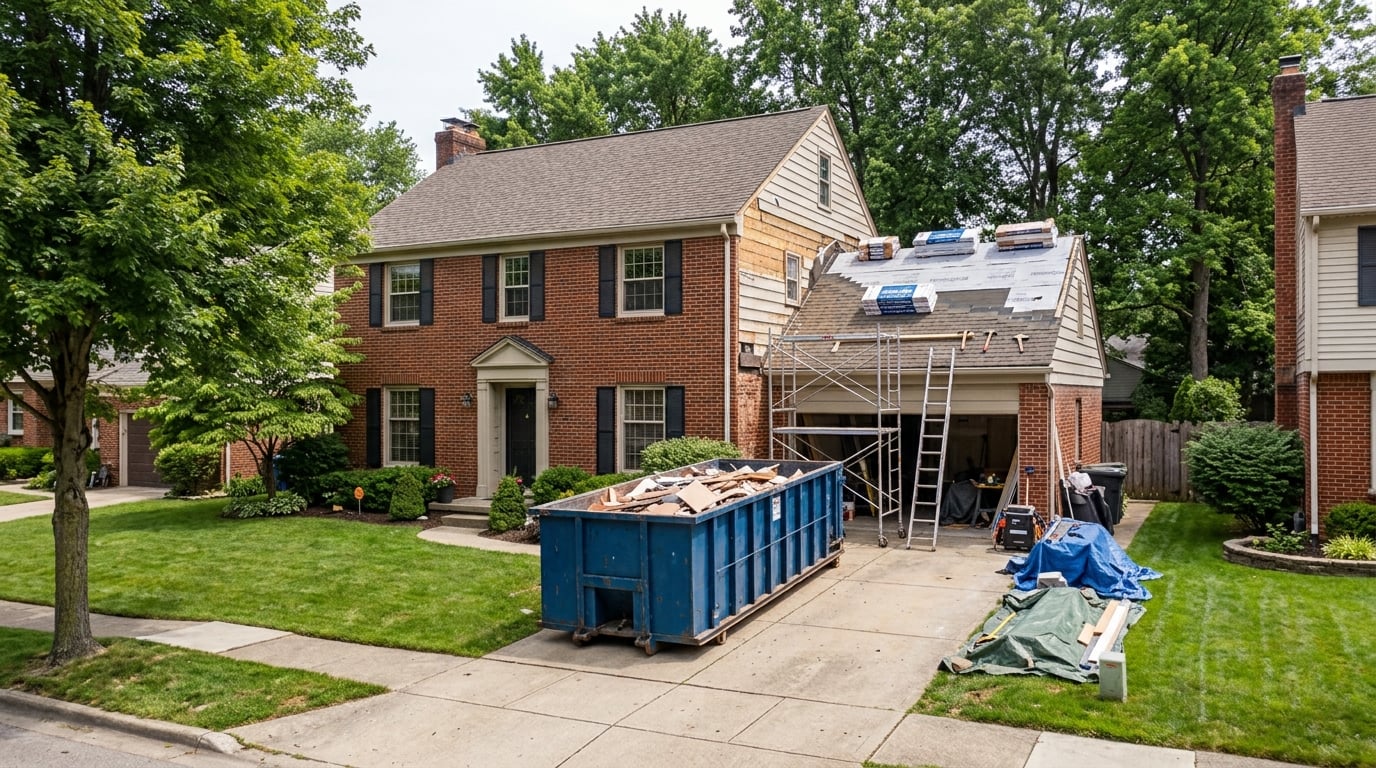
Stretch that out across a full project and the math changes fast. A simple flip now realistically runs close to five months once you account for rehab time, time on market, and a 30-day close. If you're financing that timeline with hard money or a bridge loan, every extra month on market is another month of interest-only payments eating into your margin. Investors who built their numbers around a 60 or 90-day turnaround last year are getting surprised by carrying costs they didn't budget for this year.
Run the Numbers on Both Exit Strategies, Every Time
The safest habit an investor can build right now is underwriting every deal for two outcomes, not one. If the plan is to flip, run the numbers as if you're going to keep it as a rental instead. Does the cash flow still work if it sits longer than expected and you decide to hold instead of sell at a discount?
That discipline matters more this year because flipping margins have genuinely compressed. Home flipping ROI dropped to 23.1% in the most recent reporting period, the lowest level since 2008, and flip volume nationally has declined alongside it, according to ATTOM data reported by Yahoo Finance. Rising home prices and shrinking margins are making pure flips a tougher business than it was two years ago. An investor who has a rental fallback built into their underwriting isn't forced into a discounted sale just because the market softened while their project was in rehab.
Why the BRRRR Method Still Works, Just With Tighter Math
Buy, rehab, rent, refinance, repeat hasn't stopped working. It's become the more disciplined choice precisely because flipping has gotten harder, and more investors nationally are shifting toward it for that reason, per the same ATTOM-sourced reporting. The strategy removes market timing risk from the equation. Rental income covers the carrying costs while you refinance on your own schedule instead of racing a buyer to close before your hard money note comes due.
The method isn't broken and doesn't need to be reinvented. What's changed is the margin for error. A rehab budget that used to have a 10% cushion needs closer to 15% to 20% today, and an after-repair value estimate needs to account for a longer time on market before a refinance appraisal comes back. Investors who treat those buffers as optional are the ones getting stuck holding a property that's cash-flow negative because they underestimated the carrying period.
Financing Built for the Deal, Not Retail Underwriting
Retail mortgage products (conventional, FHA, VA, USDA) weren't designed with an investor's timeline or portfolio in mind, which is why investor-specific financing has become the more practical path for anyone scaling past one or two properties. DSCR loans, which qualify a property based on its rental income rather than the borrower's personal income documentation, currently run roughly 6.25% to 8%, with pricing landing toward the lower end for borrowers with 680-plus credit and loan-to-value at or below 70%, and toward the higher end for lower credit tiers and higher leverage, according to Trulo Mortgage's 2026 DSCR rate breakdown.
That structure matters for an investor whose personal debt-to-income ratio would otherwise cap how many properties they can carry. It also matters for a deal that doesn't fit a conventional box, a multi-property purchase, a property that needs rehab before it can be occupied, or a portfolio refinance across several addresses at once. The financing conversation has kept pace with a market that's asking investors to be more precise, not less active.
Quick Tips
- Underwrite every acquisition assuming a five-month timeline, not a three-month one, and build your carrying cost math around that.
- Run the numbers on a rental hold as your backup plan even when your primary strategy is to flip.
- Increase your rehab contingency to 15% to 20% of budget rather than the 10% that worked when timelines were shorter.
- Ask your lender how DSCR pricing changes with your credit profile and LTV before you assume a single flat rate applies to your deal.
- Treat a softening market as a reason to tighten your numbers, not a reason to pause activity altogether.
FAQs
Q1: Is it still worth investing in Central Ohio real estate with rates above 7%?
A1: The fundamentals haven't disappeared, they've just gotten less forgiving. Median prices are still rising and inventory is still moving, just more slowly. Investors who build realistic timelines and bigger reserves into their underwriting are still finding workable deals. The ones getting hurt are the ones still underwriting like it's a 90-day market.
Q2: What's the difference between underwriting a flip and underwriting a BRRRR deal?
A2: A flip's return depends entirely on selling at or above your projected price within your timeline. A BRRRR deal's return depends on the property cash flowing as a rental while you refinance, which removes the pressure to hit a specific sale price by a specific date. Running both numbers on the same property tells you which one actually protects your capital if the market shifts mid-project.
Q3: How much cushion should I build into my rehab budget right now?
A3: Plan for 15% to 20% above your contractor's estimate rather than the 10% that was common when projects moved faster. Combine that with carrying cost math based on a five-month timeline rather than a three-month one, since holding costs are where softer markets quietly erode a deal's return.
Conclusion
None of this means Central Ohio has stopped being an investable market. It means the investors protecting their returns right now are the ones underwriting for a longer timeline, bigger reserves, and more than one exit strategy on every deal. If you're evaluating financing or want to stress-test a deal against today's holding cost realities, schedule a strategy call on Central Ohio investment opportunities.
Check out this article next